
Originally published October 2025 | Updated October 2026
Christian Origins of Halloween: The True Story Behind Halloween: Light, Remembrance, and Hope
Every October, we see streets aglow with carved pumpkins, children in costumes, and candy bowls overflowing. Halloween has become a night of playful frights, yet behind the costumes and candy lies a much older, deeper story, one that’s often forgotten in our modern, commercialized celebrations.
All Hallows’ Eve and the Catholic Triduum
Halloween literally means All Hallows’ Eve, the night before All Saints’ Day on November 1. Together with All Souls’ Day on November 2, these three days form the Catholic Triduum of All Hallows, a sacred time dedicated to remembering both the saints and the faithful departed.
- All Saints’ Day honors every saint, known and unknown, those who’ve reached eternal life.
- All Souls’ Day is a day of prayer for all those who have passed, a time to lift up the souls still on their journey toward God.
- All Hallows’ Eve is the vigil, the night of anticipation, reflection, and light in the darkness.
This Triduum isn’t about fear; it’s about hope, remembrance, and the enduring connection between the living and the dead.
Irish Practices That Inspired Halloween Traditions
In Ireland, the tradition of placing a candle in the window holds deep spiritual and historical significance. The light of the candle serves as a guide for the souls of loved ones who have passed, helping them find their way home during the sacred days of All Hallows’ Eve, All Saints’ Day, and All Souls’ Day. It is a quiet, reverent act of remembrance and prayer, honoring those who have gone before us.
This practice also carries a poignant historical meaning. During periods of Catholic persecution, Irish families would light a candle in their window as a discreet signal to others that a Mass was being celebrated in secret. The small flame became a beacon of faith, hope, and communal solidarity in times when public worship could be dangerous.
The Irish Jack-o’-Lantern Tradition
Long before pumpkins appeared on porches, the Irish carved turnips to ward off wandering spirits. The story of Stingy Jack, a clever man who tricked the devil and was denied entry to both Heaven and Hell, gave birth to this tradition. Jack placed a burning coal inside a carved turnip to light his way through the darkness, a symbol of hope and guidance for lost souls.
When Irish immigrants arrived in America, they discovered pumpkins were larger and easier to carve, and the tradition evolved. Yet the heart of the story remained the same: a light to guide, a reminder that even in darkness, there is hope.
Samhain: What’s True and What’s Not
You may have heard that Halloween comes from an ancient Celtic festival called Samhain. While it’s true that Celtic peoples held harvest festivals around this time, much of what popular culture claims, human sacrifice, spirit worship, and elaborate pagan rituals, is exaggerated or invented. The Irish, who were among the Celtic peoples, adapted some seasonal customs, but these are not the origins of Halloween as we know it.
The modern celebration of Halloween, or All Hallows’ Eve, has its roots in the Catholic Church’s establishment of All Saints’ Day on November 1. Pope Gregory III designated this date in the 8th century to honor all saints and martyrs. The evening before, known as All Hallows’ Eve, was a vigil in preparation for the feast day. This practice was later formalized by Pope Gregory IV in 837, making it a universal observance within the Church. The Church also established All Souls’ Day on November 2, completing a three-day Triduum of remembrance. All Souls’ Day is dedicated to praying for all the faithful departed, offering Masses and prayers for souls in purgatory, and honoring those who have gone before us.
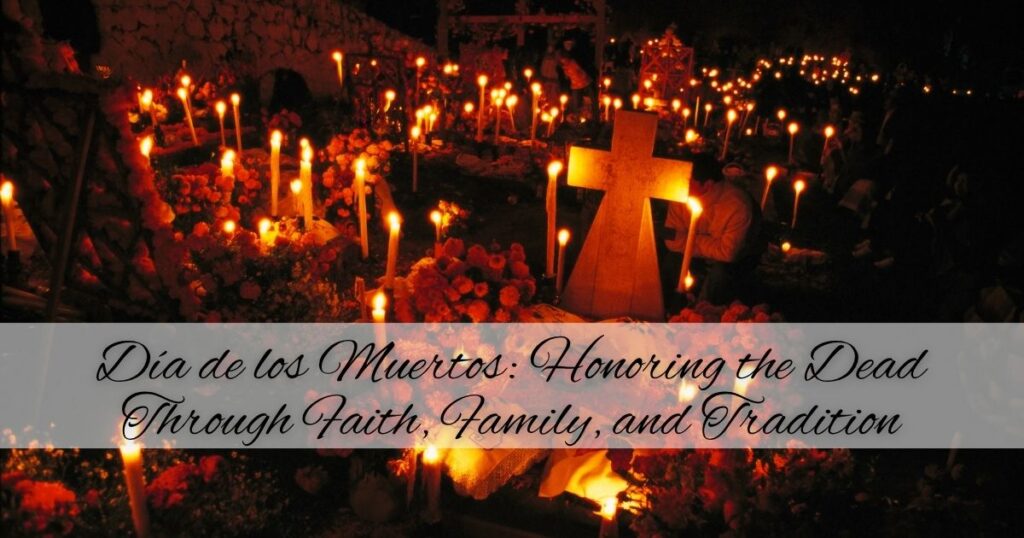
Día de los Muertos: Honoring the Dead Through Faith, Family, and Tradition
Across the Americas, Día de los Muertos honors deceased loved ones while reflecting deep Catholic roots. Though often associated with indigenous practices, the holiday aligns with All Saints’ Day (November 1) and All Souls’ Day (November 2), brought to the Americas by Spanish, Portuguese, and Italian missionaries.
Families create ofrendas (altars) adorned with candles, marigolds, and the favorite foods of the departed, welcoming their spirits home. Sugar skulls (calaveras de azúcar), a tradition influenced by Catholic European customs from Italy and Spain, symbolize the deceased and celebrate the continuity of life and faith.
At its heart, Día de los Muertos is about remembrance, prayer, and joy: honoring the dead while affirming the enduring connection between the living and those who have gone before us.
A Season of Light and Reflection
This October, when you see a glowing pumpkin on a doorstep or a candle flickering on a Día de los Muertos altar, remember the deeper meaning behind the light. Halloween, All Saints’ Day, All Souls’ Day, and Día de los Muertos share a common purpose: to guide, to remember, and to honor the eternal bond between the living and those who have gone before us.
Light a candle for someone you miss. Whisper a prayer of thanks. Share a small treat with a friend. In doing so, you continue a centuries-old tradition, one of love, hope, and remembrance, that shines brightly through the season.

Fun fact: Taryn O’Kelly, the star of my cozy mystery series, is Irish and loves all things holidays and parties. You can bet she’ll dress in costume, make pumpkin goodies, and light a candle in the window this All Hallows’ Eve! 🎃
For more ways to enjoy a family-friendly Halloween, check out my 31 Days of Real Halloween Movies and my all-things-pumpkin recipes for cozy treats that will delight everyone from trick-or-treaters to your own sweet tooth.
If you’d like to explore more about this season of waiting, light, and hope, check out Halloween, All Saints’, All Souls’: The ‘Autumn Triduum’ of Waiting from Word on Fire.
Light a candle, carve that pumpkin, and make this season your own little celebration of history, family, and fun!
“Death leaves a heartache no one can heal, love leaves a memory no one can steal.”
— From an Irish Headstone
As always, thanks for stopping by for some Salty Inspirations!