
Día de los Muertos
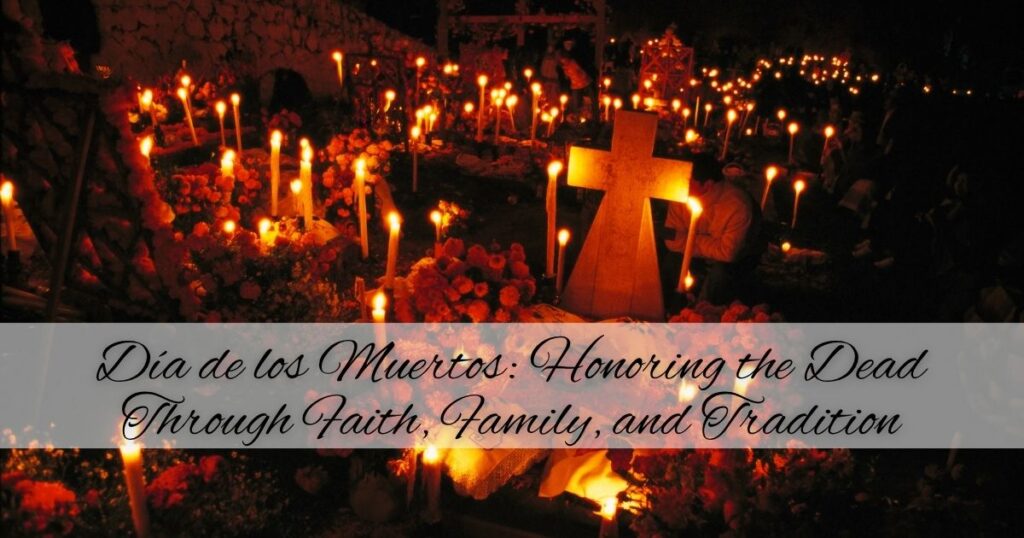
When most people think of Día de los Muertos, they picture colorful sugar skulls, marigolds, candles, photographs, beautiful altars, and families gathering to remember those they love.
It is one of Mexico’s most recognizable and beautiful traditions. But there is a deeper history behind those November celebrations. One that reaches across cultures and centuries, and it begins with something many people already know: Halloween.
The Three Days of All Hallows
Halloween is not an isolated day on the calendar. Its traditional Christian name, All Hallows’ Eve, refers to the evening before All Saints’ Day.
Together, October 31, November 1, and November 2 form three days of remembrance known as the All Hallows Triduum
October 31 – All Hallows’ Eve: the vigil before All Saints’ Day
November 1 – All Saints’ Day: honoring all the saints, known and unknown
November 2 – All Souls’ Day: remembering and praying for the faithful departed
It is a beautiful progression:
Vigil. Celebration. Remembrance and prayer.
I explored the history of Halloween and All Hallows’ Eve more fully in my post, The Christian Origins of Halloween: The True Story Behind Halloween: Light, Remembrance, and Hope. This post picks up where that one leaves off and follows the tradition of remembering the dead into Día de los Muertos.
Remembering the Dead Is an Old Catholic Tradition. The Catholic practice of praying for the dead did not begin in Mexico.
Christians have prayed for those who have died for centuries, and the Church has long taught the importance of remembering the faithful departed and entrusting them to God’s mercy.
The specific November 2 observance of All Souls’ Day became associated with St. Odilo of Cluny around 998. From Cluny, the practice of a special annual commemoration of the dead gradually spread throughout the Catholic Church.
So, when we light a candle, visit a grave, attend Mass, place flowers at a cemetery, or pray for someone who has died, we are participating in a tradition with deep Christian roots.
From Europe to Mexico
When Spanish missionaries and colonists brought the Catholic calendar to the Americas, they brought All Hallows Triduum with them.
Over generations, the Catholic observances and existing Mexican customs developed alongside one another, creating the distinctive Día de los Muertos traditions we know today.
Even Mexico’s National Institute of Anthropology and History describes the modern celebration as rooted in the Catholic observances of All Saints and All Souls, while also recognizing the Indigenous traditions that became part of it.
In Spain, families have traditionally marked All Saints’ Day and the days surrounding it by attending Mass, visiting cemeteries, bringing flowers, and remembering loved ones who have died.
Even the sugar skull has a story. The beautiful calaveras de azúcar we associate with Día de los Muertos are distinctly Mexican, but the idea of creating sweets to represent death, saints, and sacred objects has much older Catholic European roots. Spain had huesos de santo, or “bones of the saints,” while Italy had frutti dei morti, “fruits of the dead.” In Mexico, that tradition took on its own beautiful artistic expression through sugar skulls and alfeñiques. Sugar art has been around for centuries.
Families create beautiful displays with photographs of loved ones, candles, flowers, food, personal objects, and religious images. These aren’t simply decorations. They are acts of remembrance. That is where I think the heart of the tradition becomes especially beautiful.
Catholic Christianity has always placed importance on remembering the dead, praying for them, visiting their resting places, and placing our hope in the resurrection.
We remember the people who shaped our lives. We pray for those who have gone before us, and we hope in the promise that death is not the end.
The Catholic Church doesn’t celebrate death because death is something to be celebrated in itself. We remember the dead because we believe in the resurrection and in the promise of eternal life through Christ.
Día de los Muertos is a beautiful reminder that traditions can cross oceans, survive centuries, and take on new life while still carrying pieces of the history that came before them. Perhaps that is why I love this season so much.
Halloween begins the story with a vigil. All Saints’ Day turns our attention toward those who have gone before us in faith. All Souls’ Day gives us a day to remember and pray for the faithful departed.
And Día de los Muertos gives that remembrance a beautiful Mexican expression filled with color, family, memory, and love.
Different cultures may express remembrance in different ways, but the human desire behind it is remarkably universal:
We don’t want to forget the people we love. Faith reminds us that love does not simply disappear when someone dies.
If you have never celebrated the All Hallows Triduum or Día de los Muertos, I invite you to start a new tradition. One where family is at the heart and remembering our lost loved ones brings us together.

For more ways to enjoy a family-friendly Halloween, check out my 31 Days of Real Halloween Movies and my all-things-pumpkin recipes for cozy treats that will delight everyone from trick-or-treaters to your own sweet tooth.
If you’d like to explore more about this season of waiting, light, and hope, check out Halloween, All Saints’, All Souls’: The ‘Autumn Triduum’ of Waiting from Word on Fire.
And if all this talk of the dead has you in the mood for a mystery, you don’t have to go too far. 😉
My Taryn O’Kelly Mysteries have plenty of dead bodies, but thankfully, they’re fictional, and Taryn and her friends are always ready to find out what happened. If you enjoy cozy mysteries with small-town shenanigans, friendship, humor, and a little romance, come meet Taryn in Silver Springs.
Because sometimes remembering the dead is about honoring then and sometimes it’s about figuring out who killed them.
“You are not forgotten, loved one, nor will you ever be.”
As always, thanks for stopping by for some Salty Inspirations! —Michelle ❤️


